

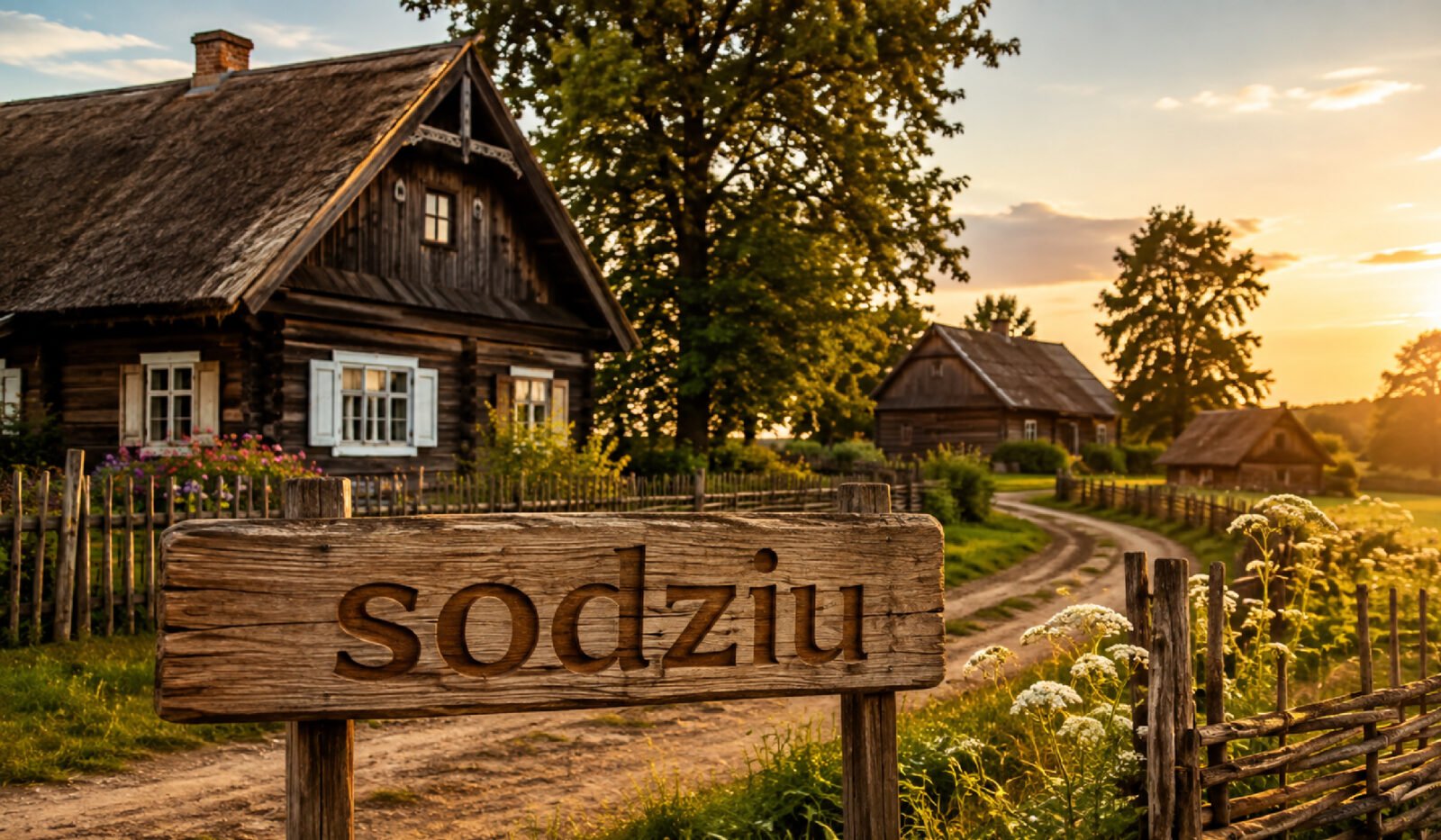
Sodziu is a word connected with Lithuania’s villages, countryside, and rural heritage. The more accurate Lithuanian spelling is sodžius, a word used for a village or rural settlement. It can also bring to mind the wider world of traditional countryside life, including farms, wooden homes, local food, seasonal work, and community traditions.
The word has gained attention online, but some descriptions are confusing or unsupported. This guide explains the real meaning of Sodziu and explores Lithuanian village history, farming, architecture, food, crafts, folklore, celebrations, modern rural life, and tourism.
What Does Sodziu Mean?
Sodziu is commonly understood as a simplified spelling of the Lithuanian word sodžius. In Lithuanian, the word refers to a village or rural settlement. The spelling “Sodziu” may appear online because people sometimes type Lithuanian words without special characters such as ž.
The meaning is closely tied to Lithuania’s countryside and its long rural history. A sodžius was not simply a house or farm belonging to one family. It referred more broadly to a rural settlement where people lived and worked. Over time, the word also developed strong associations with farming, nature, traditional homes, and community life.
Sodziu, Sodžius, Sodyba, and Kaimas: Understanding the Difference
Several Lithuanian words related to rural life can easily be confused. Sodžius generally refers to a village or rural settlement. Kaimas is another Lithuanian word for a village and is widely used in modern language. Their meanings can overlap, although sodžius may sound more traditional in some contexts.
Sodyba has a different meaning. It usually describes an individual homestead, farmstead, or countryside property. A sodyba may contain a house, garden, barn, land, and other buildings. Its plural is sodybos. In simple terms, a sodyba is one rural property, while a sodžius can describe the larger settlement.
The Historical Roots of Sodziu in Lithuania
Village communities have been important to Lithuanian life for centuries. Rural settlements developed around farmland, forests, rivers, lakes, roads, and other resources people needed for everyday survival. Agriculture supported many households, while forests and waterways provided additional food and materials.
Lithuanian villages changed greatly over time. Wars, political rule, land reforms, industrialization, and economic change all affected rural communities. The Soviet period brought collectivized agriculture and major changes to land ownership and farming. After Lithuania restored independence in 1990, private ownership and new economic opportunities returned. Modern villages, therefore, reflect many layers of Lithuanian history rather than a single unchanging tradition.
Traditional Life in a Lithuanian Sodziu
Life in a traditional Lithuanian village depended heavily on work, family, and the surrounding land. Many households grew crops, cared for animals, maintained gardens, prepared food, collected firewood, and repaired their own buildings and tools. Daily responsibilities depended on the size and resources of each household.
Family members often worked together. Practical knowledge could pass from parents and grandparents to younger generations through everyday experience. Neighbors were also important, especially when difficult jobs required several people. Village life was not identical everywhere. Regional traditions, wealth, religion, land quality, and historical period all influenced how Lithuanian rural families actually lived.
The Four Seasons and Rural Village Life
The changing seasons shaped almost every part of traditional rural life. Spring was a time for preparing fields, planting crops, repairing equipment, and beginning garden work. Summer required long periods of outdoor labor, including crop care and haymaking.
Autumn brought harvesting and preparation for the colder months. Families needed to gather crops and preserve enough food to last through winter. During winter, some outdoor agricultural work decreased, but household duties continued. People cared for animals, repaired tools, prepared food, and practiced useful crafts. Weather could determine whether crops succeeded, making knowledge of seasons especially valuable for farming families.
Traditional Sodziu Homes and Rural Architecture
Wood played a major role in traditional Lithuanian rural architecture because forests provided an accessible building material. A typical homestead could include a main wooden house, barns, sheds, storage buildings, animal enclosures, gardens, and fences. Layouts differed according to region, wealth, and farming needs.
Lithuania’s cold winters also influenced home design. Heating was essential, and stoves could serve important roles in both cooking and warming living spaces. Cellars and other storage areas helped families protect food for winter. Decorative wooden details sometimes appeared around windows, doors, roofs, and gates. Today, some older farmsteads survive as homes, museums, or restored tourism properties.
Farming, Gardening, Livestock, and Beekeeping
Agriculture formed the economic foundation of many Lithuanian villages. Families grew grains and vegetables according to local conditions. Rye was particularly important and became closely connected with Lithuania’s famous dark bread. Potatoes and garden vegetables also became major parts of everyday rural food.
Livestock added food, transport, labor, and other useful resources. Depending on the household, farms could include cattle, horses, pigs, and poultry. Beekeeping also has a long history in Lithuania. Honey was valued as food, while beeswax had practical uses. Rural families could further supplement their supplies by gathering mushrooms, berries, herbs, and other useful plants from forests and meadows.
Nature, Forests, and the Lithuanian Countryside
Lithuanian village life developed in close contact with forests, fields, rivers, lakes, wetlands, and meadows. These landscapes were not simply beautiful surroundings. They provided wood, food, water, grazing areas, and materials needed for everyday life.
Forests were particularly valuable. People collected mushrooms, berries, herbs, and firewood, and these traditions remain familiar in Lithuania today. The region of Dzūkija, with its extensive forests, is especially associated with mushroom gathering. Nature also appears throughout Lithuanian folklore, songs, and older Baltic traditions. Although modern rural life has changed greatly, forests and waterways remain important parts of Lithuania’s countryside identity and outdoor culture.
Traditional Lithuanian Village Food
Traditional rural food was strongly influenced by ingredients families could grow, raise, gather, or preserve. Rye, potatoes, vegetables, dairy products, meat, mushrooms, berries, and honey all became important parts of Lithuanian food culture. Dark rye bread, known as juoda duona, holds an especially important place.
Potatoes are used in well-known dishes such as cepelinai, while šaltibarščiai, a cold beet soup, is another famous Lithuanian food. These dishes belong to Lithuanian cuisine generally rather than only to sodžius communities. Rural families also smoked, salted, dried, and fermented foods. Such preservation methods helped households maintain reliable supplies during Lithuania’s long, cold winters.
Crafts and Skills Passed Through Generations
Traditional village households depended on many practical skills. People could make, maintain, and repair items that were needed around the home or farm. Textile work was especially important. Linen and wool were used for clothing, household fabrics, towels, and other useful items.
Weaving and embroidery could combine practical needs with decorative patterns. Woodworking was another valuable skill because wood was widely available. Furniture, spoons, tools, fences, storage containers, and parts of buildings could be made locally. These traditions were often learned within families or communities. Today, museums, heritage programs, workshops, and craftspeople help preserve knowledge of traditional Lithuanian rural skills.
Folklore, Folk Songs, and Rural Beliefs
Stories and songs helped rural communities preserve knowledge before modern media became part of everyday life. Lithuanian folk songs cover many subjects, including love, family, work, nature, war, marriage, and seasonal activities. They provide valuable insight into earlier ways of thinking and living.
Folklore also contains supernatural figures and stories connected with forests, water, animals, and unexplained events. Laumės, for example, appear in Baltic folklore as supernatural female beings, while Velnias appears in many traditional tales. Older Baltic beliefs gradually existed alongside Christianity, creating complex traditions. Proverbs, legends, songs, and family stories helped communities carry cultural memory across generations.
Festivals and Seasonal Traditions
Seasonal celebrations have long brought Lithuanian families and communities together. Joninės, celebrated around midsummer, is associated with bonfires, wreaths, plants, singing, and outdoor gatherings. The celebration combines traditions that developed across different periods of Lithuanian history.
Kūčios, the traditional Christmas Eve meal, is another important family occasion with special foods and customs. Užgavėnės takes place before Lent and is known for masks, costumes, performances, and festive eating. Agricultural communities also celebrated important stages of the farming year, including harvest time. Traditions were never exactly identical in every village, and local customs could vary between regions and individual families.
How Sodziu Life Changed in Modern Lithuania
Modern Lithuanian villages are very different from the farming communities of earlier centuries. Electricity, modern roads, cars, agricultural machinery, mobile phones, and internet access have transformed everyday life. Farming itself has become more mechanized and can operate on a much larger scale.
Not everyone living in a Lithuanian village works in agriculture today. Rural residents may commute to towns, work remotely, operate businesses, or combine farming with other employment. Traditional wooden houses may stand beside renovated or newly constructed homes. Some old farmsteads have also become guesthouses or holiday properties. Modern sodžius life therefore combines rural heritage with contemporary technology and lifestyles.
Sodziu, Sustainability, and Traditional Resourcefulness
Some traditional countryside practices resemble ideas now associated with sustainable living. Rural families often repaired tools, reused materials, grew food, preserved seasonal produce, and depended heavily on resources available nearby. These habits were practical because supplies had to last and waste could create serious problems.
Seasonal eating was also a normal part of life because many foods were available only at particular times of year. However, historical villages should not automatically be described using modern labels such as “zero waste” or “organic.” Those terms have different meanings today. Instead, traditional Sodziu life demonstrates how careful resource use, repair, preservation, and local knowledge supported rural households.
Rural Tourism and Experiencing Sodziu Culture Today
Visitors can experience parts of Lithuanian countryside culture through modern rural tourism. One popular option is staying at a sodyba, which may range from a traditional farmstead to a comfortable countryside guesthouse. Properties are often located near forests, rivers, or lakes.
Depending on the location, visitors may find traditional food, sauna experiences, craft activities, bread-making, beekeeping, fishing, cycling, hiking, or opportunities to gather mushrooms and berries. Ethnographic museums and preserved rural buildings also provide a closer look at historical village life. Rural tourism can create income for local communities while encouraging the preservation of architecture, traditional skills, food, and cultural knowledge.
Is Sodziu Really an Ancient Fabric-Dyeing Technique?
Some online articles describe Sodziu as an ancient Eastern European method of fabric dyeing. They may connect it with natural dyes, batik, tie-dyeing, wax-resist methods, or colorful textile patterns. This description should be treated with caution because established Lithuanian usage of sodžius refers to a village or rural settlement.
Traditional textile work certainly existed in Lithuania. Weaving, spinning, embroidery, linen production, and other fabric crafts have genuine places in Lithuanian cultural history. However, that does not make “Sodziu” the established name of a dyeing technique. Batik and resist dyeing have their own histories. Reliable evidence should therefore be required before repeating such claims.
Is Sodziu a Type of Cuisine?
Sodziu is also sometimes presented online as the name of a separate cuisine featuring paprika, goulash, pörkölt, chicken paprikash, and fisherman’s soup. This interpretation creates another problem. These dishes are strongly associated with Hungarian cuisine, rather than proving the existence of a distinct cuisine called Sodziu.
Food is certainly important when discussing Lithuanian village life, but the focus should remain on genuine Lithuanian rural traditions. Rye bread, potatoes, dairy products, mushrooms, berries, preserved vegetables, and locally available meats all have stronger connections with Lithuania’s countryside heritage. Therefore, Sodziu is better understood as a rural settlement term, not a recognized culinary category.
Why Sodziu Still Matters in Lithuanian Culture
Sodziu matters because villages played an important role in shaping Lithuanian history and cultural life. Farming communities produced food, maintained local traditions, developed practical skills, and passed songs, stories, recipes, and knowledge from one generation to another.
Today, Lithuania is a modern European country, and rural life continues to change. Still, traditional architecture, food, crafts, folklore, and seasonal celebrations remain valuable parts of cultural heritage. Museums, restored farmsteads, cultural programs, artisans, and rural tourism can help preserve this knowledge. Understanding sodžius is therefore not simply about looking backward. It helps explain how Lithuania’s countryside contributed to traditions that remain meaningful today.
Conclusion
Sodziu is best understood through the Lithuanian word sodžius, meaning a village or rural settlement. Behind this simple definition is a much larger story involving farming, wooden homes, forests, food, crafts, folklore, family life, and changing rural communities.
It is also important to separate sodžius from related words. A sodyba generally refers to an individual homestead, while kaimas is a common Lithuanian word for village. Claims describing Sodziu as a separate cuisine or an ancient fabric-dyeing method lack solid support. Understanding its genuine Lithuanian meaning offers a clearer and more useful window into the country’s rich rural heritage.
FAQs
What does Sodziu mean?
Sodziu is commonly used as a simplified spelling of the Lithuanian word sodžius. The word generally means a village or rural settlement and is associated with Lithuania’s traditional countryside and rural communities.
Is Sodziu the same as sodžius?
Yes, Sodziu is often an online spelling of sodžius without the Lithuanian letter ž. Sodžius is the proper Lithuanian form and refers to a village or rural settlement.
Is Sodziu a Lithuanian word?
The Lithuanian word is sodžius. “Sodziu” is a simplified form that may appear when Lithuanian characters are unavailable. Its meaning is connected with villages and Lithuania’s wider rural heritage.
What is the difference between sodžius and sodyba?
Sodžius generally describes a village or rural settlement. Sodyba usually refers to an individual rural homestead or property that may include a house, garden, barns, land, and other farm buildings.
What does kaimas mean in Lithuanian?
Kaimas is a common Lithuanian word meaning village or rural settlement. Its meaning overlaps with sodžius, although sodžius can carry a more traditional or older rural sense depending on the context.
What was life like in a traditional Lithuanian village?
Traditional village life often centered on farming, gardening, livestock, food preparation, repairs, crafts, and seasonal work. Families depended heavily on the land and often shared practical knowledge across generations.
What food was traditionally eaten in Lithuanian villages?
Rural diets included locally available foods such as rye bread, potatoes, vegetables, dairy products, meat, mushrooms, berries, and honey. Smoking, drying, salting, and fermentation helped families preserve food for winter.
Is Sodziu an ancient fabric-dyeing technique?
There is no solid basis for treating Sodziu as the established name of an ancient Lithuanian fabric-dyeing technique. Sodžius is associated with a village or rural settlement, although Lithuania does have genuine textile traditions.
Is there really a separate Sodziu cuisine?
Sodziu is not generally recognized as a separate cuisine. Some online descriptions incorrectly connect it with Hungarian dishes. Lithuanian village food is better understood as part of Lithuania’s broader national and regional culinary traditions.
Can tourists experience traditional Lithuanian countryside culture today?
Yes. Rural tourism can include stays at countryside homesteads, traditional food, saunas, craft activities, museums, forests, lakes, and outdoor experiences. Available activities depend on the region and individual tourism property.
You may also read: Fist Blog