

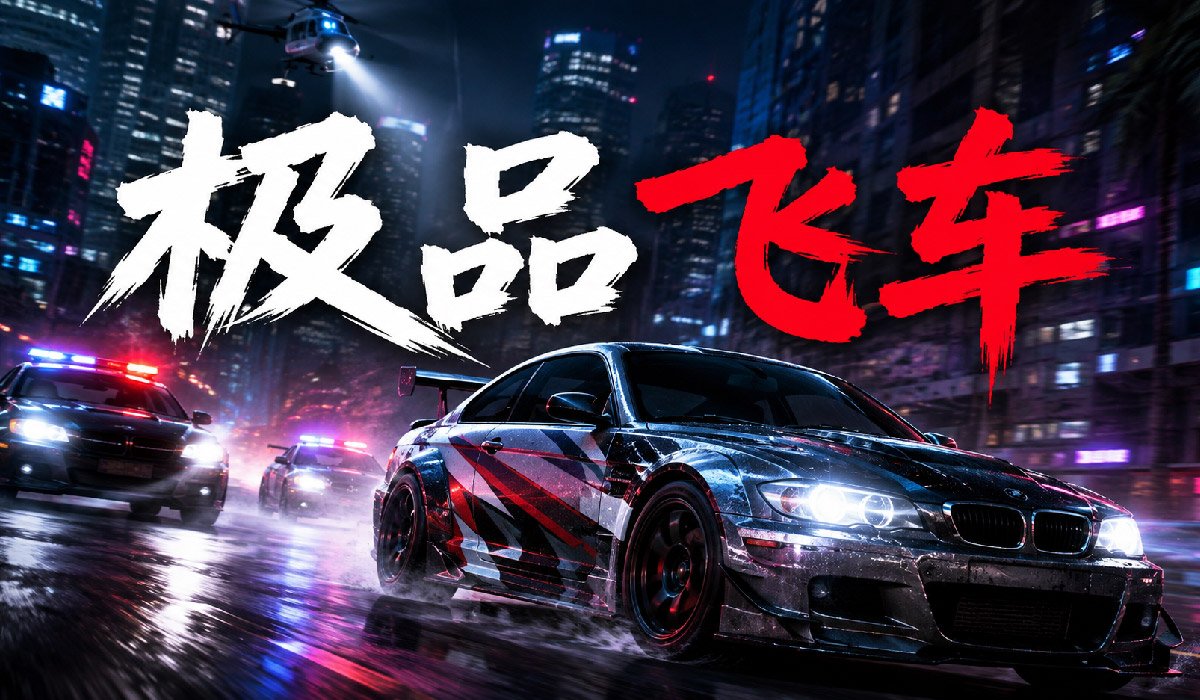
Jipinfeiche is a name racing game fans may see when exploring Chinese gaming pages, videos, or discussions about Need for Speed. The term comes from the Chinese title 极品飞车, which Electronic Arts uses on its official Simplified Chinese Need for Speed pages. The franchise itself began in 1994 and has grown through many different games, developers, platforms, and racing styles. This guide explains what Jipinfeiche means, its history, major games, driving style, cars, customization, police pursuits, multiplayer features, and lasting place in racing game culture.
What Is Jipinfeiche?
Jipinfeiche is the romanized form of 极品飞车, the name used for Need for Speed in Simplified Chinese. EA’s own Chinese-language website places this name directly on its official Need for Speed pages, including entries for games such as Need for Speed Heat and Need for Speed Hot Pursuit Remastered. Therefore, Jipinfeiche should not be presented as an unrelated racing franchise or mysterious independent game. When people encounter the term in a Chinese gaming context, it normally points to Need for Speed. The series is known for fast racing, performance cars, customization in many releases, and police action in selected titles.
What Does Jipinfeiche (极品飞车) Mean?
Jipinfeiche is a romanization of the Chinese characters 极品飞车. A simple literal reading does not perfectly match the English words “Need for Speed,” because localized game names are not always direct translations. The important point for readers is that 极品飞车 functions as the established Simplified Chinese title for the franchise. EA itself uses 《极品飞车》 on its Chinese Need for Speed website. This also explains why searching “Jipinfeiche” can lead to Need for Speed information. The spelling is simply the Chinese pronunciation represented with Latin letters rather than Chinese characters.
Is Jipinfeiche the Chinese Name for Need for Speed?
Yes. In mainland Chinese usage, 极品飞车 is the established name for Electronic Arts’ Need for Speed franchise. EA provides particularly strong confirmation because its official Simplified Chinese Need for Speed page is titled 《极品飞车》 and lists individual franchise releases under that name. Confusion can happen when someone sees “Jipinfeiche” written in Latin letters without the Chinese characters or the English Need for Speed name beside it. It may look like the title of a separate game. In its normal gaming context, however, it refers to the familiar Need for Speed series.
The Origin and History of Jipinfeiche
Need for Speed dates back to 1994. EA stated in a franchise retrospective that the series had been running since the release of Need for Speed that year. By 2009, EA reported that the franchise had already passed 100 million copies sold and had appeared in 22 languages across more than 60 countries. Over time, Need for Speed moved through very different approaches to racing. Some entries focused on exotic cars and roads, while others became closely linked with underground racing, customization, police pursuits, open worlds, or more motorsport-focused driving. This variety is an important part of its history.
How the Need for Speed Series Evolved Over the Years
Jipinfeiche has never followed one fixed formula. Early Need for Speed games helped establish the series around fast cars and road racing. Later releases explored tuning culture, street racing, police pursuits, open-world driving, and more realistic motorsport ideas. Different development studios have also worked on the franchise during its long history. Modern games continue to combine older ideas with newer systems. For example, Need for Speed Unbound includes extensive customization, multiplayer activities, free-roam gameplay, drifting, and police encounters. This constant change helps explain why two Need for Speed games can offer noticeably different experiences.
Most Important Games in the Jipinfeiche Series
Several Need for Speed releases represent important stages in the franchise. The original game established the series in 1994. Later generations expanded its identity through street racing, customization, and police-based gameplay. Titles in the Underground period became strongly associated with modified cars and urban racing, while Most Wanted mixed street competition with memorable police pursuits. Hot Pursuit releases emphasized battles between racers and law enforcement. Later games such as the 2015 Need for Speed reboot returned strongly to customization and urban car culture. EA described that release as featuring visual customization, performance upgrades, handling tuning, an open world, and narrative elements.
How Jipinfeiche Gameplay Works
There is no single gameplay system shared by every Jipinfeiche title. In general, Need for Speed is best known as a racing series designed around speed and accessible entertainment. Players enter events, drive different vehicles, improve their skills, and progress through challenges or other game-specific systems. Some releases emphasize street racing, while others put more attention on police pursuits or different forms of competition. Modern titles can also combine races with open-world activities and online play. Need for Speed Unbound, for example, includes racing, drifting, free-roam activities, rewards, customization, and police encounters. Exact mechanics always depend on the individual release.
Street Racing and Arcade-Style Driving
Street racing has become one of the most recognizable themes in many Jipinfeiche games, although it is not the focus of every release. The series generally favors excitement and accessibility over being a strict driving simulator. Roads, traffic, dramatic environments, rivals, and police can make races feel less controlled than traditional circuit competition. The 2015 Need for Speed, for example, was built around a nocturnal open world and modern urban car culture. EA also organized its experience around Speed, Style, Build, Crew, and Outlaw. This entertainment-focused approach has helped Need for Speed develop an identity separate from serious motorsport simulations.
Cars and Automotive Culture in Jipinfeiche
Cars are at the heart of Jipinfeiche. Over its history, the franchise has included many licensed performance vehicles from well-known manufacturers. The exact car list changes with each game, so no single list represents the entire series. Hot Pursuit Remastered, for example, includes models from manufacturers such as Aston Martin, Audi, BMW, Bugatti, Chevrolet, Lamborghini, and others. Certain Need for Speed releases also place strong attention on automotive culture outside pure racing. EA said its 2015 game worked closely with Speedhunters to reflect contemporary car modification culture and authentic aftermarket products.
Vehicle Customization and Performance Tuning
Customization is especially important in many modern and street-focused Jipinfeiche games. It can include both visual changes and upgrades that affect how a car performs. Need for Speed Unbound, for example, allows players to personalize cars through body parts, wheels, paint, wraps, decals, exhaust options, and other visual choices. It also provides performance customization that changes how vehicles behave. Earlier releases offered different levels of modification. The 2015 Need for Speed included aftermarket visual parts, performance upgrades, handling tuning, and a wrap editor. Because systems vary by title, customization should be considered a major franchise theme rather than a universal feature.
Police Pursuits and the Heat System
Police pursuits are another famous part of Jipinfeiche, but they do not work the same way in every game. Some Need for Speed releases build major parts of their gameplay around escaping law enforcement. Others use police more lightly. Hot Pursuit is especially associated with direct competition between racers and police. This idea returned in Need for Speed Unbound’s Volume 8 update, which introduced a 4-versus-4 Hot Pursuit mode where players could compete as cops and racers. It also included pursuit technology such as spike strips, EMP equipment, and an ESF battering ram. These systems add pressure beyond simply winning a race.
Racing Modes and Open-World Exploration
The types of races available in Jipinfeiche depend heavily on the individual game. Across different releases, players may encounter circuit-style events, point-to-point races, drifting, time-based challenges, pursuits, and other competitions. Open-world design has also become important in several modern titles, allowing players to travel between activities rather than choosing every event from a simple menu. Need for Speed Unbound uses Lakeshore as its setting and includes free-roam multiplayer activities, drifting playlists, police encounters, and community challenges. However, it would be inaccurate to describe every Need for Speed title as open-world because the franchise has used several different structures.
Online Multiplayer and the Jipinfeiche Community
Online play has expanded what modern Jipinfeiche games can offer. Instead of competing only against computer-controlled drivers, players can race and participate in activities with other people. Need for Speed Unbound has included multiplayer playlists and free-roam activities such as Linkups, where players work toward shared objectives. Its later Lockdown mode introduced a PvPvE format involving multiple squads, police, objectives, and an expanding danger zone. Beyond the games themselves, Need for Speed fans discuss cars, tuning, races, updates, and older releases online. Community participation therefore adds another layer to the franchise’s long-term appeal.
Jipinfeiche on PC, PlayStation, Xbox, and Other Platforms
Need for Speed has appeared on a large range of gaming systems during its long history. EA reported as early as 2009 that the franchise had already launched titles across more than 14 platforms. Individual games have appeared on PC and multiple generations of PlayStation and Xbox hardware, while selected entries have also reached Nintendo systems, handheld devices, and mobile platforms. Availability must always be checked game by game. An older Need for Speed release may not have a current version for modern hardware, and newer games do not necessarily support older systems. Players should therefore choose a specific title before checking platform compatibility.
Why Classic Jipinfeiche Games Are Still Popular
Older Jipinfeiche games remain an important part of Need for Speed’s identity. Their cars, environments, customization systems, police action, and distinctive approaches to racing helped create different eras within the franchise. EA itself continues to revisit older ideas. Need for Speed Unbound’s Volume 8, for example, brought back Hot Pursuit-inspired cops-versus-racers gameplay. Volume 9 also included vehicles inspired by the Blacklist from Most Wanted, showing how modern content can refer directly to earlier games. This continued reuse of classic themes shows that older entries still influence how the franchise presents itself today.
Jipinfeiche vs Racing Simulation Games
Jipinfeiche is generally better understood as an entertainment-focused racing franchise than as one dedicated entirely to realistic motorsport simulation. Many Need for Speed games emphasize speed, dramatic action, customization, street culture, or police pursuits. This makes them approachable for players who want exciting racing without learning every technical detail of professional driving. Racing simulators usually place greater emphasis on realistic vehicle physics, precise track driving, and motorsport rules. Need for Speed has occasionally moved closer to simulation ideas, but the wider franchise has explored many styles. The key difference is purpose: Jipinfeiche commonly puts exciting racing experiences ahead of strict real-world accuracy.
Common Myths and Misunderstandings About Jipinfeiche
The biggest misunderstanding is that Jipinfeiche is a separate game unrelated to Need for Speed. EA’s official Chinese website clearly uses 《极品飞车》 as the Chinese name for its Need for Speed franchise. Another mistake is assuming that every game under the name has identical features. Some releases emphasize police pursuits, while others focus more heavily on tuning, open worlds, or different racing styles. Claims that Jipinfeiche is an established ancient philosophy or unrelated lifestyle system should also be treated carefully unless reliable historical evidence is provided. In gaming contexts, the documented meaning is tied directly to Need for Speed.
Is Jipinfeiche Worth Playing Today?
Jipinfeiche can still be appealing to players who prefer accessible racing, recognizable cars, customization, and action. The best game depends on the type of experience someone wants. A player interested in police-versus-racer action may prefer a Hot Pursuit-style experience, while someone interested in modern street racing and personalization may find newer titles more suitable. Need for Speed Unbound combines vehicle and character customization with racing, drifting, multiplayer activities, and police encounters. Older titles can offer very different experiences. For that reason, newcomers should compare individual games rather than expecting every Need for Speed release to follow the same formula.
Tips for New Jipinfeiche Players
New players should first learn the handling system of the specific Need for Speed game they choose. Avoid assuming that the fastest-looking car will always be easiest to drive. Practice braking before difficult corners and make smooth steering movements instead of constantly correcting the car. When a game provides performance tuning, consider handling and control as well as raw speed. Learn familiar routes before worrying about perfect race times. If police are present, understanding escape routes can also be useful. Most importantly, experiment with different vehicles. Need for Speed games can reward different approaches, and learning what suits your driving style takes practice.
The Cultural Impact and Legacy of Jipinfeiche
Need for Speed has built a long international history since its 1994 debut. By 2009, EA said the franchise had passed 100 million copies sold, appeared in 22 languages, and reached more than 60 countries. Its different eras have explored exotic performance cars, street racing, automotive modification, police pursuits, open worlds, and online competition. Modern releases still reference earlier games and ideas, showing continuity across generations. Jipinfeiche is therefore more than an unfamiliar Chinese search term. It is another name connected with a racing franchise that has been part of video game culture for decades.
Conclusion
Jipinfeiche is best understood as the romanized form of 极品飞车, the Simplified Chinese name associated with Electronic Arts’ Need for Speed franchise. EA’s official Chinese pages confirm this connection clearly. Since beginning in 1994, Need for Speed has changed considerably, exploring different combinations of fast cars, street racing, customization, police pursuits, open worlds, and multiplayer competition. Not every feature appears in every game, which is important when discussing the series accurately. Despite those changes, Jipinfeiche remains connected to one of gaming’s longest-running and most recognizable racing franchises.
FAQs
What does Jipinfeiche mean?
Jipinfeiche is the romanized form of 极品飞车, the Simplified Chinese name used for Need for Speed. EA uses 《极品飞车》 on its official Chinese Need for Speed website.
Is Jipinfeiche a separate racing game?
No. In this context, Jipinfeiche refers to Need for Speed rather than a separate racing franchise. The confusion usually comes from seeing the Chinese name written in Latin letters.
Does Jipinfeiche have car customization?
Many Need for Speed games include customization, but the options vary. Need for Speed Unbound provides extensive visual and performance customization, while other titles may offer simpler or different systems.
Can I play Jipinfeiche on PC?
Many Need for Speed titles have PC versions. However, platform support differs between games, especially older releases. Players should check the requirements and availability of the specific title they want to play.
Does every Jipinfeiche game have police chases?
No. Police are important in several Need for Speed games, particularly Hot Pursuit-style releases, but their role varies across the franchise. Some games focus much more heavily on other forms of racing.
Is Jipinfeiche an open-world racing series?
Some Need for Speed games use open-world environments, but not every release does. The series has changed its structure many times, so features should always be discussed in relation to specific games.
Why is Jipinfeiche popular with racing fans?
The franchise combines fast racing with famous cars and, depending on the title, customization, street culture, police pursuits, open worlds, or multiplayer competition. Its long history also connects several generations of players.
When did Need for Speed begin?
The Need for Speed franchise began in 1994. EA has described the series as dating from the original Need for Speed release that year.
You may also read: Shihuanuo: Hair Dye Shampoo, Ingredients, Benefits & Safety