

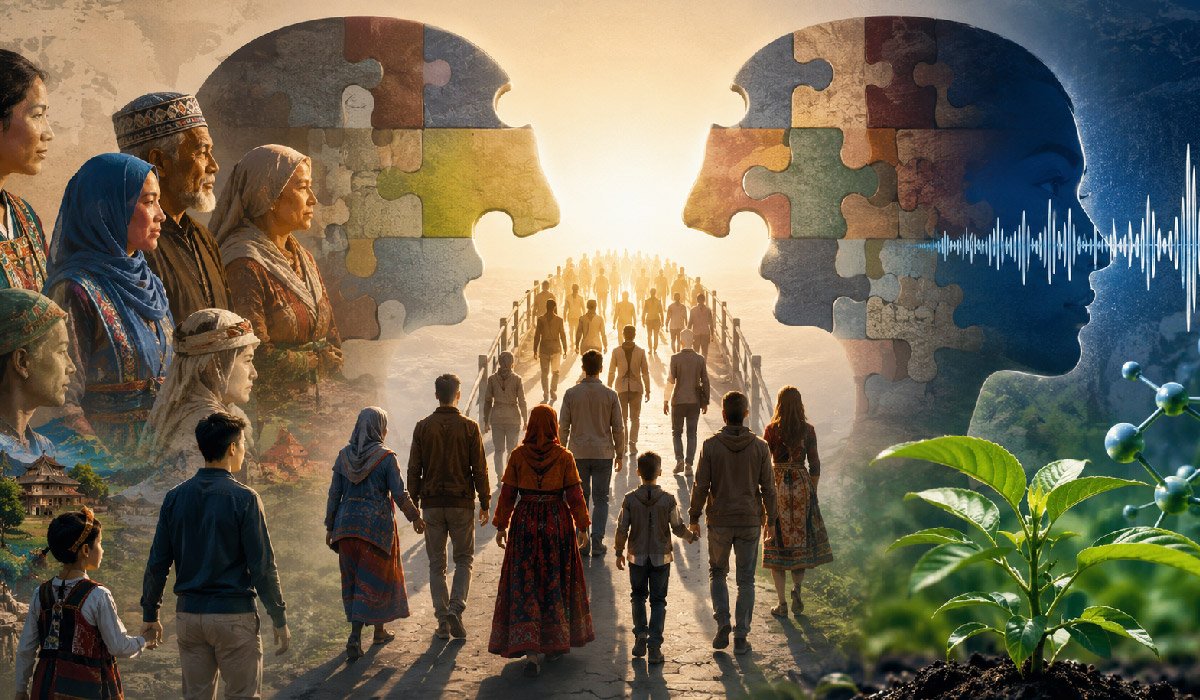
Assimilasjon is the Norwegian word for assimilation. It describes a process in which people, sounds, or substances become more similar to something else or are incorporated into a larger system. The meaning changes depending on the subject. In social science, it often concerns minorities and majority cultures. In linguistics, it describes changes between speech sounds. Also, in biology, it concerns substances being taken up and transformed by living organisms. This article explains these meanings clearly, with special attention to assimilation in Norwegian history and its effects on language, culture, and identity.
What Is Assimilasjon?
The Norwegian dictionary defines assimilasjon as adaptation or transformation into something already existing. It can also describe a political or self-driven process in which a minority group becomes more similar to a majority. The word comes from Latin and is related to the idea of “making similar.” Assimilasjon is also used as a technical term in subjects such as linguistics, physiology, and botany. Because the same word has several meanings, readers need to consider the context before deciding exactly what it describes.
Different Meanings of Assimilasjon
Assimilasjon has several established meanings. In society, it usually refers to a process in which a minority gradually becomes more similar to a majority. In linguistics, it happens when one speech sound influences another and makes the sounds partly or fully alike. Also In biology, assimilation refers to organisms taking up substances and converting them into material they can use. These meanings are clearly different, yet they share one basic idea. Something changes, adapts, or becomes part of another system. That shared idea explains why the same term appears across several academic fields.
What Does Assimilasjon Mean in Society and Culture?
In society, assimilasjon describes a process in which individuals or minority groups become more similar to the majority population. This can involve language, customs, social behavior, education, work, or everyday habits. It may develop naturally as people interact with schools, workplaces, neighborhoods, and public institutions. It can also be encouraged or imposed through government policy. Norwegian dictionaries specifically recognize both politically driven and self-driven assimilation. This distinction matters because cultural change based on personal choice is very different from pressure designed to make minority cultures disappear.
How Cultural Assimilation Happens
Cultural assimilation usually develops gradually. Language is often one of the strongest influences because people need to communicate at school, work, and in public life. Children may become familiar with majority customs through education and friendships. Adults may adapt through employment, local communities, or social relationships. Marriage between people from different backgrounds can also bring traditions together. Over time, some cultural habits may become less common while others remain strong. Assimilation therefore does not always happen completely. A person may participate fully in majority society while continuing to speak a heritage language or follow family traditions.
Voluntary and Forced Assimilasjon
Voluntary assimilation happens when people choose to adopt parts of another culture. They may learn a new language, follow local customs, or change social habits because doing so makes daily life easier. Forced assimilation is very different. It occurs when authorities or powerful institutions try to make minority groups abandon their language, identity, or traditions. The Norwegian term assimilasjonspolitikk describes policies intended to make a minority more similar to the majority population. The important difference is choice. Cultural adaptation through normal contact is not the same as a state-led effort to remove cultural differences.
Assimilasjon and the Role of Language
Language is often central to cultural assimilation. When one language dominates schools, government services, employment, and public communication, minority speakers may feel strong practical pressure to use it. Children can become more fluent in the majority language than in the language spoken by earlier generations. If families stop passing a heritage language to children, the number of fluent speakers may decline. Language change can therefore become one of the clearest signs of assimilation. At the same time, learning a majority language does not automatically require abandoning another language. Bilingualism can allow both participation and cultural continuity.
Assimilasjon vs. Integration
Assimilation and integration are related, but they are not identical. Assimilation generally involves minorities becoming increasingly similar to the majority. Integration focuses more on participation in society while allowing cultural differences to continue. A person can learn Norwegian, work, study, use public institutions, and take part in community life without abandoning a heritage language or family traditions. Store norske leksikon describes integration as the inclusion of immigrants in majority society and notes that modern Norwegian debates often distinguish integration from assimilation. The difference is important because participation does not necessarily require cultural sameness.
Assimilasjon, Identity, and Belonging
Assimilation can influence how people understand identity and belonging. Some people feel closely connected to both their family heritage and the wider society in which they live. Others may experience pressure to behave differently in different settings. Language, family traditions, religion, food, music, and community relationships can all shape identity. Cultural adaptation does not always replace an older identity. People may develop mixed, layered, or bicultural identities instead. This is why assimilation is better understood as a process with different degrees rather than a simple choice between two cultures. Individual experiences can differ greatly, even within the same family.
Assimilasjon Across Generations
Cultural change often develops differently across generations. People who migrate as adults may continue using their first language and following familiar traditions. Their children may grow up with both the family culture and the majority culture around them. Later generations may use the majority language more often, especially in education, work, and friendships. Some traditions may weaken, while others remain important symbols of family identity. This pattern is not universal, but it shows why assimilation can take many years. It also explains why language transmission between parents and children is so important for the survival of minority languages.
Norwegianization and Assimilasjon in Norway
Norwegian history provides an important example of state-driven assimilation. Norwegianization, known as fornorskingspolitikken, aimed to make Sámi and several minority communities more culturally and linguistically Norwegian. The policy became especially influential from the nineteenth century onward and eventually affected several areas of public life. Official sources describe it as an active assimilation policy developed by Norwegian authorities. Schools, language rules, land policies, religious institutions, and other systems all played roles at different times. Its purpose was not simply social participation. It sought to increase cultural and linguistic similarity with the Norwegian-speaking majority.
How Norwegianization Affected the Sámi
The Sámi were deeply affected by Norwegianization policies. Authorities promoted Norwegian language and culture while reducing the space available for Sámi languages and traditions in important institutions. Education became a major tool in this process. In several periods and regions, children were expected to use Norwegian in school, which weakened the everyday position of Sámi languages. Norwegianization also affected cultural identity and relations with public institutions. The later Truth and Reconciliation Commission examined both historical policies and their continuing effects on Sámi language, culture, identity, and social conditions.
Assimilation of Kven, Norwegian Finn, and Forest Finn Communities
Norwegianization did not affect only the Sámi. Kven and Norwegian Finn communities were also targeted by assimilation policies, especially in northern Norway. Government material notes that policies toward Kven/Norwegian Finns were particularly strict between about 1850 and 1960. Restrictions affected language use in schools and other institutions. Forest Finns were also included in the work of Norway’s Truth and Reconciliation Commission. However, the experiences of these groups were not identical. Each community has its own history, language, and relationship with the Norwegian state, so their experiences should not be treated as one single story.
Schools, Language, and the Norwegianization Policy
Schools were one of the strongest tools of Norwegianization. Government documents show that Kven became increasingly restricted in education. From 1880, it was mainly permitted as a supporting language, and in 1936 even this use was prohibited. Boarding schools also separated many children from their home language environments. For Sámi and Kven children, education could therefore become an important place where Norwegian replaced minority languages. Policies also reached beyond schools. Language requirements appeared in land rules and other public systems, showing that assimilation was supported through several parts of society rather than education alone.
Long-Term Effects of Forced Assimilation
Forced assimilation can continue affecting communities long after official policies end. When children stop learning a language, later generations may lose access to stories, place names, oral traditions, and family knowledge connected with it. People may also experience uncertainty about identity or feel separated from cultural practices their grandparents knew. Norway’s Truth and Reconciliation Commission was specifically asked to examine present-day consequences connected with language, culture, identity, material conditions, and social experiences. These long-term effects show why assimilation cannot be judged only by what happened during the years when particular government rules were active.
Norway’s Truth and Reconciliation Commission
Norway’s Storting established the Truth and Reconciliation Commission in 2018. Its task was to investigate Norwegianization and injustice toward the Sámi, Kven/Norwegian Finns, and Forest Finns, examine continuing consequences, and suggest measures that could support reconciliation. The commission delivered its report to the Storting on June 1, 2023. Parliament considered the report in November 2024. On November 12, 2024, the Storting apologized for its historical role in Norwegianization and acknowledged responsibility for the policy’s consequences for affected groups and individuals.
Language Loss and Cultural Revitalization
Language revitalization seeks to strengthen languages that became weaker through assimilation, social pressure, or reduced transmission between generations. This can involve teaching children, creating learning materials, supporting media, increasing public use, and building community spaces where minority languages are spoken naturally. Norway’s follow-up to the Truth and Reconciliation Commission has included attention to Sámi and Kven language education and local language and cultural arenas. Revitalization does not mean rejecting Norwegian society. Instead, it can allow people to participate fully in wider society while also protecting language, history, and cultural knowledge for future generations.
What Is Assimilasjon in Linguistics?
In linguistics, assimilasjon has a precise technical meaning. It occurs when one speech sound influences another so that the two become completely or partly similar. Store norske leksikon explains that assimilation develops because the organs used for speech are constantly moving. Sounds naturally flow into one another during ordinary speaking. If the sounds are next to each other, the process is called contact assimilation. If they are separated, it can be called distant assimilation. Linguistic assimilation happens in natural speech and can also become part of historical changes in a language over time.
Types and Examples of Linguistic Assimilation
One important type is regressive assimilation, where a later sound influences a sound that comes before it. Store norske leksikon gives the historical development from Old Norse vatn to Norwegian vann as an example. Assimilation may also move in the other direction, with an earlier sound influencing a later one. Changes can involve where a sound is produced in the mouth, whether it is voiced, or other pronunciation features. These processes are common because speakers naturally adjust their mouth and tongue movements while talking. They are normal sound patterns, not simply speaking errors.
How Sound Assimilation Influences Language Change
A small pronunciation change can become permanent when many speakers use it over a long period. Children may eventually learn the changed pronunciation as the normal form rather than as a temporary feature of fast speech. This is one way assimilation contributes to historical sound change. It can also help explain differences between dialects, because sound patterns may develop differently in separate regions. Linguists study such changes to understand how earlier forms of languages became modern ones. Assimilation therefore connects everyday pronunciation with the much larger process of language development across generations.
What Is Assimilasjon in Biology?
In biology, assimilation describes organisms taking up substances and transforming them into part of themselves. Store norske leksikon explains that plants take in inorganic substances and convert them into organic material. Carbon dioxide, for example, can be assimilated through photosynthesis and used to form sugars. The Norwegian dictionary also uses assimilation as a physiological term for taking up and transforming nutrients into part of an organism. Biological assimilation is therefore about incorporation and use. It should not be confused with the social meaning of assimilation, even though both involve something becoming part of a larger system.
Assimilation in Plants: Carbon and Nitrogen
Plants provide clear examples of biological assimilation. During carbon assimilation, carbon dioxide enters biochemical processes connected with photosynthesis and is incorporated into organic compounds. These compounds help provide the building material needed for plant growth. Plants must also obtain nitrogen, which is needed for amino acids, proteins, nucleic acids, and many other important molecules. Nitrogen taken from the environment must be converted into forms that can become part of plant tissues. Together, carbon and nitrogen assimilation help plants transform simple inorganic materials into organic substances that support growth and, ultimately, wider food webs.
Assimilation in Humans and Animals
Humans and animals also incorporate substances obtained from food. Proteins are broken down into amino acids, which can later be used to make body proteins and other important compounds. Carbohydrates provide sugars that can enter metabolic pathways, while fats provide fatty acids and other components used for energy storage and cellular structures. The term assimilation emphasizes what happens when available nutrients become part of the organism or are used in biological processes. It is therefore one stage within a much larger system involving eating, digestion, absorption, transport, metabolism, growth, and repair.
Digestion, Absorption, and Assimilation: What Is the Difference?
Digestion, absorption, and assimilation describe connected but different steps. Also, Digestion breaks food into smaller molecules that the body can handle. Absorption moves many of those nutrients from the digestive tract into the blood or other tissues. Assimilation describes their incorporation and use within the organism. For example, eating protein begins with digestion, but the amino acids produced may later become part of new body proteins. Keeping these terms separate makes biological explanations more accurate. Assimilation should therefore not be used simply as another word for digestion, because it describes what happens after nutrients have become available for use.
Cultural, Linguistic, and Biological Assimilasjon Compared
The three main uses of assimilasjon share a broad idea but describe very different processes. Cultural assimilation concerns people and social groups becoming more similar in language, customs, or behavior. Linguistic assimilation concerns one speech sound becoming more like another. Biological assimilation concerns living organisms taking up substances and converting them into usable material. Context therefore decides the meaning.
| Area | What Changes | Simple Example |
|---|---|---|
| Society | Cultural practices | Adopting a majority language |
| Linguistics | Speech sounds | One sound influencing another |
| Biology | Biological substances | Plants assimilating carbon dioxide |
Why Assimilasjon Still Matters Today
Assimilasjon remains important because questions about language, identity, migration, minority rights, and cultural participation are still relevant. Modern societies often need to balance a shared public life with respect for different cultural traditions. Norway’s experience also shows why historical assimilation policies remain part of present-day discussions about reconciliation and language recovery. At the same time, the word continues to have established scientific meanings in linguistics and biology. Understanding these different uses prevents confusion. It also helps readers recognize why assimilation can describe a normal sound process in one context and a deeply political historical process in another.
Final Thoughts
Assimilasjon is a broad Norwegian term with several established meanings. In social life, it describes minorities becoming more similar to a majority, either gradually or through deliberate policy. Norway’s history of Norwegianization shows the serious consequences that forced assimilation can have for languages, cultures, and communities. In linguistics, assimilation is a normal process in which sounds influence each other. In biology, it involves organisms incorporating and transforming substances. The central lesson is simple: context matters. Assimilation can describe natural adaptation, technical biological processes, or policies shaped by unequal power, so the meanings should never be treated as identical.
FAQs
What does assimilasjon mean?
It is the Norwegian word for assimilation and can refer to cultural change, speech sounds, or biological processes.
Is assimilasjon the same as integration?
No. Integration allows participation while cultural differences can remain. Assimilation usually involves becoming more similar to the majority.
Was Norwegianization a form of assimilation?
Yes. Norwegian authorities used policies intended to increase linguistic and cultural similarity with the Norwegian majority.
Who was affected by Norwegianization?
The Sámi, Kven/Norwegian Finns, and Forest Finns were among the groups examined by Norway’s Truth and Reconciliation Commission.
What is linguistic assimilation?
It is a process where one speech sound becomes partly or completely similar to another nearby sound.
What is biological assimilation?
It means taking up substances and transforming them into material that becomes part of, or is used by, a living organism.
You may also read: Insoya: Nutrition, Benefits, Uses, Safety and Complete Guide