

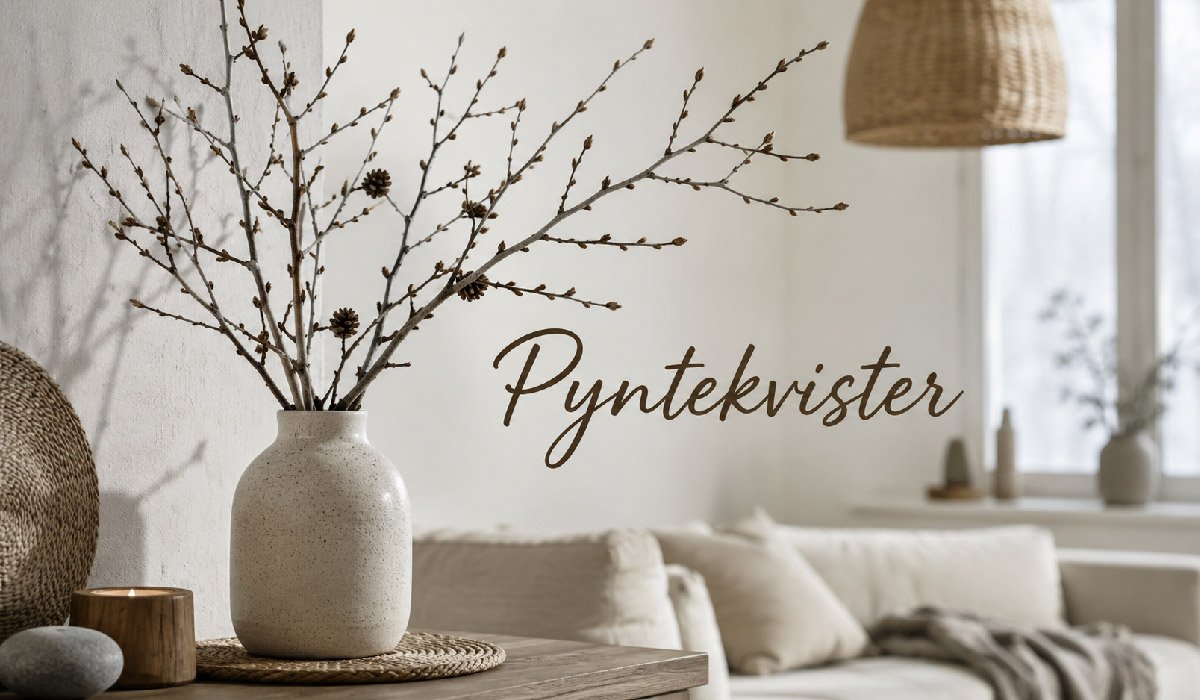
Pyntekvister is a Norwegian term connected with decorative twigs and branches used inside the home. It offers a simple way to add natural shape, texture, and seasonal character to interior spaces.
The term attracts attention because Scandinavian interiors, natural materials, and minimalist decoration remain popular. Decorative branches are affordable, flexible, and suitable for people who prefer calm spaces without adding too many decorative objects.
This guide explores what Pyntekvister means, its Norwegian language roots, its connection with Scandinavian decor, suitable branches, styling methods, seasonal ideas, DIY projects, care, sustainability, safety, and common decorating mistakes.
What Is Pyntekvister?
Pyntekvister refers to decorative twigs or branches. In Norwegian, pynte relates to decorating or making something attractive, while kvister means twigs or branches. The term therefore has a straightforward practical meaning.
Pyntekvister can include natural branches collected for decoration, dried stems prepared for long-term display, or artificial branches made to copy natural forms. They are commonly arranged in vases, containers, wreaths, and seasonal displays.
It is better understood as a Norwegian decor term rather than a separate interior-design movement. Its appearance fits naturally with Scandinavian styling because both can emphasize simplicity, natural forms, useful materials, and uncluttered arrangements.
Is Pyntekvister a Real Word or a Misspelling?
Pyntekvister is not simply a random misspelling created by internet searches. It makes sense as a Norwegian compound word. Norwegian frequently combines words to describe an object, purpose, activity, or everyday concept clearly.
The important distinction is its meaning. Pyntekvister should not automatically be presented as the name of an ancient Scandinavian philosophy or a formal design movement. At its simplest, the word describes twigs or branches intended for decoration.
Confusion can happen when the term appears on English-language websites without explanation. Once its components are understood, the meaning becomes much clearer: these are decorative branches that can be styled in many traditional or modern ways.
Where Does the Word Pyntekvister Come From?
The word comes from Norwegian. The first part is related to pynte, meaning to decorate, adorn, or make something look attractive. The second part, kvister, is the plural form associated with twigs or branches.
Together, the parts describe branches used decoratively. This type of compound construction is normal in Norwegian and other Germanic languages, where two familiar words can be joined to give an object a more specific description.
The linguistic meaning does not require Pyntekvister to have one fixed appearance. A pyntekvist could be bare, leafy, flowering, dried, painted, or decorated, depending on its purpose, season, and the style of the surrounding room.
How Pyntekvister Fits Scandinavian Interior Design
Scandinavian interiors are widely associated with practical layouts, simple forms, natural materials, and restrained decoration. Decorative branches work well within this approach because their shapes provide visual interest without requiring large or highly ornamental accessories.
A few branches can introduce texture and height while leaving plenty of open space around them. Their irregular natural lines also create contrast beside straight furniture, smooth walls, simple shelves, and clean architectural forms.
However, Pyntekvister does not belong only in Scandinavian interiors. Decorative branches can work with rustic, contemporary, farmhouse, Japandi, traditional, industrial, and eclectic spaces when their size, container, color, and placement suit the room.
Why Decorative Branches Have Become Popular
Modern interiors often use fewer objects with stronger visual impact. A tall branch arrangement can fill vertical space without requiring several small ornaments. This makes decorative branches especially useful in uncluttered rooms and compact homes.
Nature-inspired decorating has also become increasingly attractive. Wood, plants, flowers, stone, linen, and other organic elements can soften interiors dominated by manufactured surfaces. Branches offer another simple way to introduce recognizable natural forms indoors.
Practicality matters as well. Dried branches can last for months or longer, while artificial versions require little care. Also, Fresh seasonal branches can change the appearance of a room without replacing furniture or making expensive renovations.
Fresh, Dried, and Artificial Pyntekvister
Fresh branches offer changing leaves, buds, blossoms, fragrance, or greenery depending on the plant. They can create the liveliest arrangement, although their appearance changes over time and some varieties need water and regular attention.
Dried branches are useful when longevity is more important. Their muted colors, visible bark, seed heads, and unusual shapes can add texture. They normally need little maintenance apart from careful handling and occasional dust removal.
Artificial branches provide another practical option. High-quality versions can imitate leaves, berries, blossoms, or bare stems and remain consistent throughout the year. They are particularly convenient where keeping fresh plant material is difficult or inconvenient.
Popular Branches for Indoor Decoration
Birch is visually attractive because of its distinctive bark and slender form. Willow is another useful option, especially curly or contorted varieties whose twisting stems create movement even when displayed without leaves or additional ornaments.
Flowering branches can provide stronger seasonal interest. Depending on local availability, cherry, apple, magnolia, quince, or forsythia branches may produce colorful blossoms. Fresh-cut branches sometimes open indoors when collected at the appropriate stage.
Evergreen material such as pine, fir, or spruce is particularly associated with winter decoration. Other woody branches can work throughout the year. The best choice depends on availability, durability, scale, safety, and the appearance you want.
How to Choose the Right Pyntekvister
Start by considering the size of your room and where the arrangement will stand. Tall, spreading branches need enough surrounding space, while shorter twigs are more suitable for shelves, desks, bedside tables, and dining surfaces.
Shape is often more important than perfect symmetry. Forks, curves, bends, and uneven lines give natural branches their character. Rotate each branch before arranging it and look at how its silhouette changes from different viewing angles.
Also consider color and texture. Pale bark can complement light interiors, while darker wood creates stronger contrast. Leafy stems bring softness, bare branches emphasize structure, and flowering varieties introduce color without requiring many additional decorative objects.
Choosing a Vase or Container
The container should support the branches safely while complementing their appearance. Tall arrangements generally need a stable vase with enough weight and a suitable opening to prevent stems from spreading too far or tipping over.
Glass creates a light and simple appearance, while ceramic and stoneware can add weight and texture. Metal containers can create a more contemporary or industrial effect. The container does not always need to match the branches exactly.
Proportion is especially important. Very tall branches in a tiny lightweight vase can become unstable, while short branches can disappear visually inside an oversized container. Test the arrangement from normal viewing distance before deciding on its final position.
How to Arrange Pyntekvister
Begin with your largest or most interesting branch. Place it first and use its direction to establish the basic shape. Add other branches gradually instead of filling the vase with many stems immediately.
Varying the height and angle usually creates a more natural result. Some branches can lean outward while others remain upright. Leaving visible gaps between stems allows each silhouette to be seen and prevents the arrangement from appearing crowded.
Step away from the arrangement several times while working. Viewing it from across the room makes problems with height, balance, and empty space easier to notice. Stop adding material once the composition already feels visually complete.
Pyntekvister Ideas for the Living Room
A living room provides several useful locations for decorative branches. Tall arrangements can stand on a console, sideboard, fireplace area, or sturdy floor-level container where they add height without occupying much horizontal surface space.
For a minimalist room, one sculptural branch may be enough. Larger rooms can handle several stems with wider shapes. Try to keep the arrangement visually connected to nearby furniture rather than treating it as an unrelated decorative object.
Branches can also soften empty corners. Instead of filling every wall with artwork or shelving, a vertical natural arrangement can introduce shape and texture while preserving the open appearance that makes a room feel spacious.
Using Pyntekvister on a Dining Table
Dining-table arrangements should generally be lower or visually open enough that people can comfortably see one another. A few narrow branches in a stable vase can create a centerpiece without taking over the entire table.
Seasonal branches make the dining area easy to update. Fresh blossoms can suit spring, green stems can create a summer look, warm dried material can complement autumn, and evergreens can provide a winter atmosphere.
Remember that dining tables are working surfaces. Keep the arrangement stable and away from food when plant material may shed leaves, sap, pollen, bark, or debris. It should remain easy to move when additional table space is needed.
Pyntekvister in Bedrooms and Entryways
Bedrooms usually benefit from quieter arrangements. One or two simple branches can provide natural texture on a dresser or suitable bedside surface. Avoid oversized arrangements where they interfere with movement, lighting, or everyday objects.
Entryways can support stronger displays because they create an immediate visual impression. A tall arrangement on a console can add height, while a smaller seasonal display can bring color and texture close to the entrance.
Placement should always remain practical. Keep branches away from narrow walking paths and frequently opened doors. Sharp or projecting twigs should not extend into areas where people, children, pets, clothing, or bags may catch them.
Seasonal Pyntekvister Ideas
Spring works naturally with budding or flowering branches. Fresh green growth and blossoms can introduce color after winter. The exact species available will vary considerably according to climate, location, and the plants growing in your area.
Summer arrangements can feature leafy stems and lighter compositions. Autumn offers colorful leaves, berries, seed heads, and dried materials. These textures can introduce seasonal warmth without requiring artificial pumpkins, signs, or numerous themed decorations.
During winter, bare sculptural branches and evergreen stems become useful. Small ornaments or lights can also be added for celebrations, provided the branches are strong enough and any electrical decorations are suitable for their intended indoor use.
Creating a Simple DIY Pyntekvister Arrangement
First, choose suitable branches from a lawful and safe source. Remove loose dirt, damaged material, insects, and unwanted leaves. Do not collect branches from private land or protected areas without appropriate permission.
Trim stems to suit your container and remove small growth that makes the arrangement unnecessarily crowded. Fresh stems intended for water may benefit from a clean cut before being placed into a clean vase.
Arrange the largest stems first, then add smaller pieces only where necessary. Turn the vase and check it from several angles. A successful arrangement does not need to be perfectly symmetrical or filled with decorative accessories.
Decorating Pyntekvister with Lights and Ornaments
Bare branches provide a natural framework for lightweight decorations. Small ornaments, paper shapes, ribbons, hanging eggs, stars, or other seasonal pieces can transform the same basic arrangement for different occasions throughout the year.
Tiny decorative lights can create a warm evening display. Use products intended for indoor decoration and follow their safety instructions. Avoid damaged wires, excessive weight, and arrangements that place electrical components near water unexpectedly.
Restraint usually produces the cleanest result. If every twig carries an ornament, the natural structure can disappear. Leave some branches uncovered so their lines and texture remain part of the overall decorative composition.
Painted and Creative Pyntekvister
Branches do not have to remain completely natural. Dried twigs can be painted when a particular interior calls for stronger contrast or a coordinated color. White, metallic, dark, or muted finishes can create very different effects.
Before painting, the branch should generally be clean and thoroughly dry. Work with products appropriate for the material and intended environment, and follow ventilation, drying, handling, and safety instructions supplied by the manufacturer.
Creative treatments can move Pyntekvister away from a natural Scandinavian appearance toward contemporary or festive decor. There is no requirement to follow one aesthetic. The purpose of the arrangement should guide the final finish.
Care and Maintenance
Fresh branches require the most attention. When they are displayed in water, keep the container clean and replace the water as needed. Remove decaying leaves or flowers before they create unnecessary mess or unpleasant odors.
Dried arrangements should be kept away from unnecessary moisture because damp conditions can encourage deterioration. Dust can be removed gently using an appropriate soft method. Fragile dried stems need careful handling because they can snap easily.
Artificial Pyntekvister mainly requires cleaning. Dust tends to collect on artificial leaves and textured stems, making realistic pieces look dull over time. Follow the manufacturer’s cleaning instructions when dealing with coated, painted, or fabric-based components.
Safety When Bringing Natural Branches Indoors
Outdoor branches can carry insects, dirt, fungi, sap, or other material. Inspect them carefully before bringing them inside. Branches showing obvious infestation, extensive decay, or other undesirable growth are better left outdoors.
Plant choice also matters in homes with young children or pets. Some trees, shrubs, berries, leaves, and decorative plants can be irritating or toxic if chewed or swallowed, so identify unfamiliar material before displaying it.
Large arrangements need physical stability as well. Use a sturdy container and keep projecting stems away from faces and walkways. Dried plant material should also be kept safely away from candles, fireplaces, and other ignition sources.
Pyntekvister and Sustainable Decorating
Natural branches can support low-waste decorating when they are sourced responsibly and reused. Fallen or appropriately pruned material may gain a decorative purpose instead of requiring a newly manufactured ornament for every seasonal change.
However, “natural” does not automatically mean environmentally harmless. Cutting living branches unnecessarily, taking material from protected environments, transporting exotic plants long distances, or repeatedly buying disposable decorations can reduce the environmental benefit.
A sensible approach is to use locally available material, reuse dried arrangements, store artificial branches for repeated use, and avoid excessive consumption. Sustainable decorating depends more on sourcing and longevity than on one particular decorative style.
Pyntekvister and Biophilic Design
Biophilic design broadly describes approaches that strengthen people’s experience of nature within built environments. Plants, natural light, views, materials, patterns, textures, and organic forms can all contribute to this connection in different ways.
Decorative branches can support this visual connection by introducing recognizable natural shapes indoors. Their irregular lines contrast with manufactured furniture and straight architectural surfaces, which can make an interior feel less rigid.
Still, a vase of branches alone does not turn an entire room into a biophilic design. It is better viewed as one small nature-inspired element that can work alongside plants, daylight, wood, stone, and natural textures.
Pyntekvister Compared With Ikebana
Pyntekvister and Japanese ikebana can both involve arranging plant material, so their finished displays may sometimes appear visually similar. However, the terms should not be treated as different names for the same practice.
Ikebana refers to established Japanese traditions of floral arrangement with developed schools, techniques, aesthetics, and cultural history. Pyntekvister simply describes decorative branches or twigs and does not carry that same formal artistic framework.
You can certainly take inspiration from Japanese approaches to space, line, and balance when arranging branches. Understanding the distinction, however, prevents two different cultural ideas from being incorrectly combined into one decorative tradition.
Common Pyntekvister Styling Mistakes
One common mistake is using too many branches. More material does not necessarily create a stronger display. Crowded stems can hide the interesting lines and negative space that make a branch arrangement visually appealing.
Poor proportions are another problem. An arrangement may look awkward when the vase is too small, the branches overwhelm nearby furniture, or the stems are too short for the chosen location. Scale should suit both container and room.
Finally, decoration should not interfere with everyday life. Branches blocking conversation, doors, televisions, mirrors, lamps, or walking routes may look attractive in photographs but become frustrating in an actual home. Function should remain part of the design.
Can Pyntekvister Work Outside Scandinavian Homes?
Pyntekvister can work with many decorating styles because branches are visually versatile. Their final appearance depends less on geographic labels and more on the plant, arrangement, vase, surrounding materials, and amount of decoration added.
For rustic interiors, rough branches and handmade pottery can feel appropriate. A modern space may suit a single dramatic stem in a simple container, while farmhouse interiors can use flowering or leafy branches for a softer appearance.
Japandi-style spaces can also make effective use of restrained natural arrangements. More eclectic rooms may use painted branches, unusual containers, lights, or ornaments. Pyntekvister therefore offers an idea that can easily adapt beyond Scandinavian-inspired interiors.
Why Pyntekvister Is Useful for Small Spaces
Small homes require decoration that does not consume valuable floor or storage space. A narrow vase with several vertical branches can create height and visual interest while occupying relatively little surface area.
It is also easy to change. Instead of storing numerous large seasonal decorations, you can keep one vase and replace or modify its branches throughout the year. Reusable ornaments can provide additional seasonal variation when desired.
The key is controlling scale. Large spreading branches can overwhelm a small room, so compact arrangements are often more practical. Choose stems that use vertical space while leaving shelves, tables, entrances, and walking areas functional.
The Future of Pyntekvister in Modern Decor
Decorative branches have qualities that suit several continuing interior preferences, including natural materials, adaptable decoration, handmade objects, and restrained spaces. Their simplicity also makes them easy to reinterpret without changing the basic idea.
New versions may increasingly combine preserved botanical material, reusable artificial stems, handmade ceramics, sculptural containers, and seasonal accessories. Social platforms can continually introduce new presentation ideas, even when the underlying decorating method remains very simple.
Pyntekvister does not need to become a major named design movement to remain useful. Decorative branches have lasting appeal because they are adaptable, visually interesting, widely accessible, and capable of changing naturally with the seasons.
Final Thoughts
Pyntekvister is best understood through its straightforward Norwegian meaning: decorative twigs or branches. It is not merely a meaningless internet misspelling, nor does it need an elaborate philosophy to make it an interesting decorating idea.
Its strongest qualities are simplicity and flexibility. Fresh, dried, or artificial branches can introduce height, texture, natural shapes, seasonal color, and visual interest without requiring a room to be filled with decorative objects.
Whether your home is Scandinavian, modern, rustic, Japandi, or traditional, Pyntekvister can be adapted to suit it. Choose appropriate branches, arrange them thoughtfully, consider safety, and allow their natural forms to provide the decoration.
FAQs
What does Pyntekvister mean?
Pyntekvister is a Norwegian term for decorative twigs or branches. It combines language associated with decorating and branches, describing natural or artificial stems arranged for decorative purposes inside homes or other spaces.
Is Pyntekvister a misspelling?
Pyntekvister should not simply be treated as a misspelling. It makes sense as a Norwegian compound term referring to decorative branches or twigs, although English-language content sometimes gives the word broader meanings than necessary.
What branches are best for Pyntekvister?
Birch, willow, flowering fruit-tree branches, and various evergreen stems can work well. The best option depends on the season, desired appearance, local availability, durability, and whether the plant is safe for your household.
Can I make Pyntekvister at home?
Yes. Suitable branches can be cleaned, trimmed, and arranged in a stable vase. You can use them naturally or add simple ornaments, provided the materials are responsibly sourced and safe for indoor use.
Can Pyntekvister be used all year?
Yes. Change the material with the seasons or keep dried and artificial branches throughout the year. Blossoms suit spring, leafy stems work in warmer months, while bare branches and evergreens are popular winter options.
You may also read: Insoya: Nutrition, Benefits, Uses, Safety and Complete Guide