

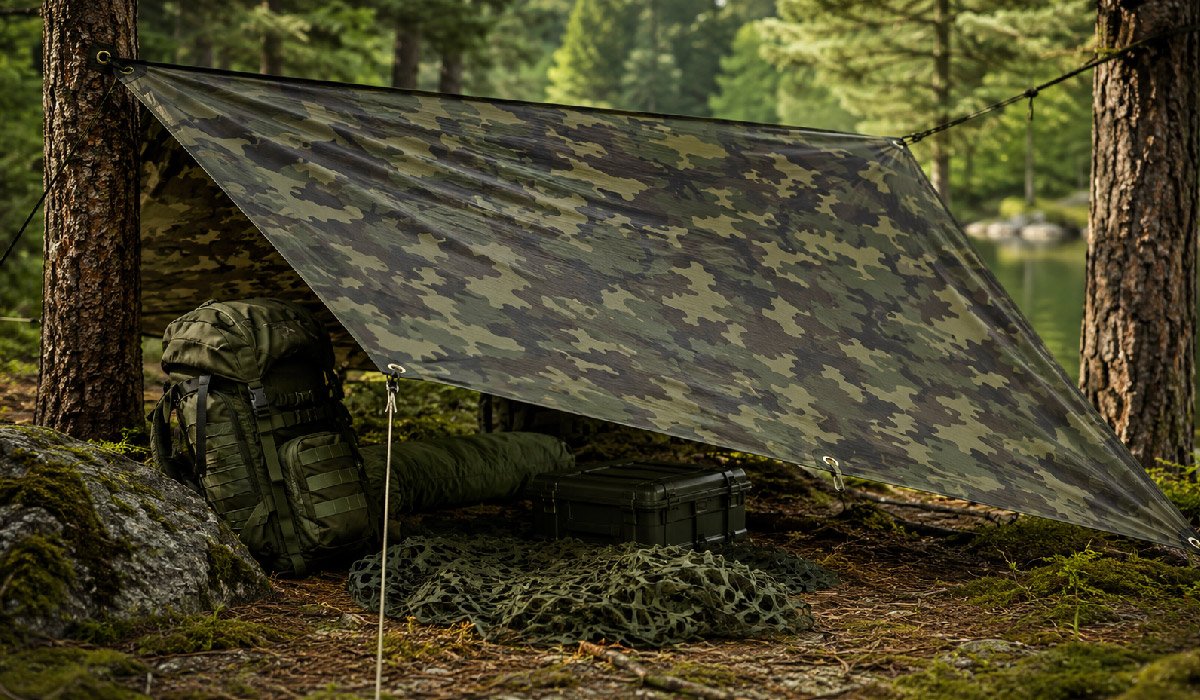
Tarnplanen are camouflage tarps or covers made for protection and concealment. The term is linked to German words for camouflage and tarpaulins. These covers combine the practical purpose of an outdoor tarp with colors and patterns designed to blend with nearby surroundings.
Today, camouflage tarps are useful in several settings. They can cover equipment, provide temporary shelter, create shade, or protect items from weather. Campers, hunters, wildlife photographers, outdoor workers, and military users may use them for different purposes. This guide explains Tarnplanen materials, designs, uses, selection, setup, care, and important safety considerations.
Tarnplanen Meaning and German Origin
The name Tarnplanen has German roots. “Tarn” relates to camouflage, hiding, or concealment, while “Plane” refers to a tarpaulin or protective sheet. “Planen” is the plural form. In simple English, Tarnplanen can therefore be understood as camouflage tarpaulins or camouflage covers.
Their purpose is easy to understand. A normal tarp mainly protects an area or object, while a Tarnplane also uses colors and patterns intended to make it less visually noticeable. The exact construction varies between products. Some are lightweight outdoor sheets, while others use heavier fabrics designed for demanding conditions and repeated use.
History and Development of Camouflage Tarps
Camouflage has a long connection with military operations because reducing visibility can help conceal personnel, equipment, supplies, and positions. Tarpaulins also have a long practical history as covers against rain, dirt, sunlight, and other outdoor conditions. Combining these two functions produced camouflage covers suited to field use.
Over time, similar products became useful outside military settings. Outdoor users found that a camouflage tarp could provide both ordinary weather protection and a less noticeable appearance in natural surroundings. Modern versions now come in many materials, weights, sizes, and patterns. Their exact features depend on the manufacturer and intended purpose.
How Tarnplanen Work
Tarnplanen perform two basic jobs. First, the fabric forms a physical cover between the protected area and outdoor conditions. Depending on its material and coating, it may help protect equipment or people from rain, wind, sunlight, dirt, and moisture.
Second, camouflage patterns help reduce obvious visual contrast. Irregular combinations of colors and shapes can make the covered object less distinct against a suitable background. Effectiveness depends greatly on the environment and pattern. A woodland pattern, for example, may stand out in open sand. Ordinary camouflage tarps should not be assumed to provide concealment from thermal, infrared, or other advanced detection systems.
Materials Used in Tarnplanen
Modern Tarnplanen can be made from polyester, nylon, polyethylene, PVC-coated fabric, canvas, or cotton-blend materials. Polyester and nylon can provide good strength while remaining relatively light and easy to pack. Ripstop versions contain reinforced weaving designed to limit the spread of small tears.
PVC-coated and polyethylene tarps are often chosen when water resistance and easy cleaning are priorities. Canvas is generally heavier but can provide a durable and more traditional outdoor cover. Some fabrics receive coatings that improve resistance to water or sunlight. Because construction varies widely, buyers should check the stated material, coating, fabric weight, and care instructions.
Key Design Features
A useful Tarnplane needs more than an attractive camouflage print. Reinforced edges help the tarp cope with tension during setup. Eyelets or grommets provide points where ropes, straps, or other suitable fasteners can be attached. Reinforced corners can also reduce damage in areas that receive repeated stress.
Other useful features may include waterproof or water-resistant coatings, UV-resistant treatments, strong stitching, multiple attachment points, and a compact packed size. Requirements differ according to use. A backpacker may prioritize low weight, while someone covering equipment may prefer thicker fabric. Product specifications should always be checked because not every camouflage tarp offers the same protection.
Common Camouflage Patterns and Colors
Camouflage patterns are designed for particular types of surroundings. Woodland patterns commonly combine greens, browns, dark shades, and irregular shapes. Desert versions usually use tan, beige, and other lighter earth colors. Snow camouflage relies heavily on white and pale tones, while urban-style designs often contain gray or muted colors.
Digital camouflage uses small, block-like shapes, although its effectiveness still depends on the environment. Multi-terrain patterns attempt to work across a broader range of landscapes. No single pattern is ideal everywhere. Vegetation, season, shadows, ground color, and local terrain should all influence the choice of a Tarnplane.
Military and Tactical Uses
Camouflage tarps have clear applications in military field environments. They may be used as covers for equipment, supplies, temporary shelters, or other positions where reducing visual contrast is useful. Weather protection is another important function because field equipment can be exposed to rain, dust, wind, and strong sunlight.
Military products can differ significantly from ordinary commercial Tarnplanen. Specialized systems may be designed around particular operational requirements and should not be confused with basic printed tarps sold for camping. A camouflage pattern alone does not make a product capable of defeating night vision, infrared imaging, thermal sensors, or other detection technologies. Such capabilities require specific materials and engineering.
Camping and Bushcraft Uses
Tarnplanen can be practical pieces of camping equipment because one sheet can perform several jobs. A properly selected tarp can form a basic overhead shelter, protect equipment from rain, provide shade, serve as a ground cover, or create a simple wind barrier when conditions allow.
Bushcraft users may appreciate a tarp because it can be arranged in different ways rather than serving only one purpose. Weight becomes important when it must be carried in a backpack. Campers should therefore consider dimensions, packed size, fabric strength, waterproofing, and attachment points. A secure setup is especially important when rain or changing weather is expected.
Hunting and Wildlife Photography
Hunters and wildlife photographers sometimes use camouflage covers to make observation positions less visually obvious. A Tarnplane can help cover equipment or form part of a temporary blind. Choosing a pattern that resembles the surrounding vegetation and terrain can make the setup less noticeable.
Camouflage alone does not guarantee that wildlife will ignore a person. Movement and noise can still reveal an observer. Wildlife should also be watched without unnecessary disturbance. Hunters must follow local seasons, licensing requirements, land-access rules, and other applicable regulations. Photographers should respect protected areas and avoid damaging vegetation simply to improve a viewing or shooting position.
Survival and Emergency Uses
A tarp can be useful in an emergency because it performs several basic functions without requiring complicated equipment. Tarnplanen may provide temporary protection from rain, create shade, cover essential supplies, separate people or equipment from wet ground, or provide a privacy screen when properly secured.
This versatility makes a compact tarp a possible addition to an emergency or vehicle kit. However, it should be viewed as one tool rather than a complete survival system. Appropriate clothing, safe drinking water, navigation, communication, first-aid supplies, and planning remain important. Users should understand how to set up their tarp safely before depending on it outdoors.
Work, Home, and Everyday Uses
Tarnplanen are not limited to camping or tactical activities. Like other durable tarps, they can be useful around a home, garden, workshop, or outdoor work area. Depending on their size and material, they may cover tools, building supplies, firewood, garden materials, or outdoor equipment.
They can also provide temporary protection from dirt or weather during suitable repair and maintenance tasks. In these situations, camouflage may offer little practical advantage over a plain tarp. The important qualities are usually durability, water resistance, size, and secure attachment points. Users should select a tarp according to the job rather than choosing one only for its appearance.
Tarnplanen vs. Regular Tarps
The clearest difference between Tarnplanen and ordinary tarps is their appearance and intended concealment role. Tarnplanen use camouflage colors or patterns, while regular tarps may be blue, green, clear, black, or many other solid colors. Both types can be made from similar materials.
A camouflage tarp is not automatically stronger than a normal one. Strength depends on fabric, thickness, weave, coating, seams, reinforcement, and manufacturing quality. The same is true for waterproofing. Someone who only needs to cover garden equipment may find a regular tarp more practical. Tarnplanen make more sense when camouflage and outdoor protection are both useful.
How to Choose the Right Tarnplanen
Start by deciding exactly what the Tarnplane will do. A hiking shelter has different requirements from a permanent equipment cover. Backpackers generally benefit from lower weight and a compact packed size. Longer outdoor setups may justify thicker and more durable materials.
Check dimensions, fabric type, coating, seams, reinforced edges, attachment points, and the manufacturer’s weather-resistance information. Choose camouflage that suits the environment if concealment matters. Price should be considered alongside construction rather than on its own. Terms such as “military grade” should not replace careful examination of actual specifications. A suitable Tarnplane is one whose measurable features match its intended job.
Choosing the Right Size
Tarnplanen come in many dimensions, and the correct choice depends on what needs to be covered. A smaller tarp can be convenient for individual equipment or lightweight travel because it takes up less packing space. Larger tarps provide more covered area and can be useful for shelters, groups, or bulky equipment.
Extra size also has disadvantages. Larger sheets weigh more, catch more wind, and may require additional ropes and stronger anchor points. The listed dimensions are not always equal to the usable sheltered area because part of the fabric may be angled during setup. Measure the intended space before buying whenever possible.
How to Set Up Tarnplanen
A good setup begins with a suitable location and secure attachment points. Ropes or straps should be connected to reinforced points rather than weak sections of fabric. Tension should be distributed across the tarp instead of being concentrated on a single corner. This reduces unnecessary stress on the material.
For rain protection, an angled surface usually allows water to drain more effectively than a flat setup. Water should not be allowed to collect in large pockets. In windy conditions, loose fabric can flap and place extra force on attachment points. Users should avoid unsafe branches, unstable structures, sharp surfaces, and prohibited attachment methods.
Cleaning, Maintenance, and Storage
Regular care helps Tarnplanen remain useful for longer. Dirt, leaves, and loose debris should be removed after use. Cleaning methods depend on the fabric and coating, so the manufacturer’s instructions should be followed. Harsh chemicals may damage some waterproof finishes or printed surfaces.
A tarp should normally be allowed to dry thoroughly before long-term storage. Packing it while wet can encourage unpleasant odors, mildew, or material deterioration. Check edges, seams, attachment points, and grommets for damage after demanding trips. Small problems are easier to manage before they become larger tears. Store the clean, dry tarp away from unnecessary heat and prolonged sunlight.
Common Mistakes to Avoid
One common mistake is buying Tarnplanen based entirely on the camouflage pattern. Material, dimensions, weight, coating, and reinforcement can be more important than appearance. Another problem is choosing a pattern that strongly contrasts with the surrounding landscape when concealment is the goal.
Poor setup can also shorten a tarp’s life. Excessive tension may damage eyelets or edges, while insufficient slope can allow rainwater to collect. Storing the tarp wet is another avoidable problem. Users should also avoid assuming that ordinary camouflage fabric provides advanced sensor concealment. Reading specifications and inspecting the tarp regularly can prevent many disappointing results.
Legal, Safety, and Environmental Considerations
Owning a camouflage tarp does not remove the need to follow rules governing the activity or location where it is used. Campgrounds, parks, forests, private land, and protected areas can have different regulations concerning camping, hunting, temporary structures, fires, and attaching equipment to trees.
Hunters should follow the laws that apply to their location, including licensing and seasonal requirements. Outdoor users should avoid damaging trees, vegetation, and wildlife habitats when setting up shelters. Leave No Trace principles provide useful guidance for reducing environmental impact. Local rules can change, so checking current regulations before visiting a managed or protected area is sensible.
Are Tarnplanen Worth Buying?
Tarnplanen can be worthwhile when a person needs both a practical outdoor cover and a camouflage appearance. They can provide shelter, equipment protection, shade, ground coverage, and visual concealment in appropriate surroundings. Their reusable design also makes them useful for people who regularly spend time outdoors.
They are not necessary for everyone. A standard tarp may be cheaper or more suitable when concealment has no value. Heavy-duty versions can also add considerable weight to camping equipment. The best choice depends on intended use, climate, transport needs, and budget. Comparing materials and construction gives a much clearer answer than choosing by camouflage pattern alone.
Conclusion
Tarnplanen combine the familiar usefulness of tarpaulins with camouflage patterns intended to reduce visual contrast in suitable environments. Their possible uses range from camping shelters and equipment covers to wildlife observation, hunting, outdoor work, emergency preparation, and specialized military applications.
The right product depends on much more than its pattern. Material, size, weight, coating, reinforced edges, attachment points, weather resistance, and intended use all deserve attention. Proper setup and regular care can also improve reliability and service life. For people who need both protection and a less noticeable outdoor cover, a well-chosen Tarnplane can be a simple and versatile piece of equipment.
FAQs
What does Tarnplanen mean?
Tarnplanen is a German term referring to camouflage tarpaulins or covers. These tarps combine outdoor protection with camouflage patterns and can be used for shelter, equipment coverage, camping, hunting, wildlife observation, and other outdoor activities.
Are Tarnplanen waterproof?
Some Tarnplanen are waterproof, while others are only water-resistant. Protection depends on the fabric, coating, seams, and overall construction. Always check the manufacturer’s specifications if you need a tarp for reliable protection during wet weather.
What materials are Tarnplanen made from?
Tarnplanen can be made from polyester, nylon, polyethylene, PVC-coated fabric, canvas, or cotton blends. Each material offers different levels of weight, durability, flexibility, water resistance, breathability, and ease of storage.
Can Tarnplanen be used for camping?
Yes. Tarnplanen can work as temporary shelters, ground covers, equipment covers, wind barriers, or shade during camping. The best option depends on its size, weight, attachment points, material, and level of weather resistance.
How long can a Tarnplane last?
Its lifespan depends on material quality, weather exposure, frequency of use, and maintenance. Cleaning it correctly, drying it before storage, checking attachment points, and repairing small damage early can help extend its useful life.
You may also read: Viltnemnda: Complete Guide to Wildlife Management in Norway